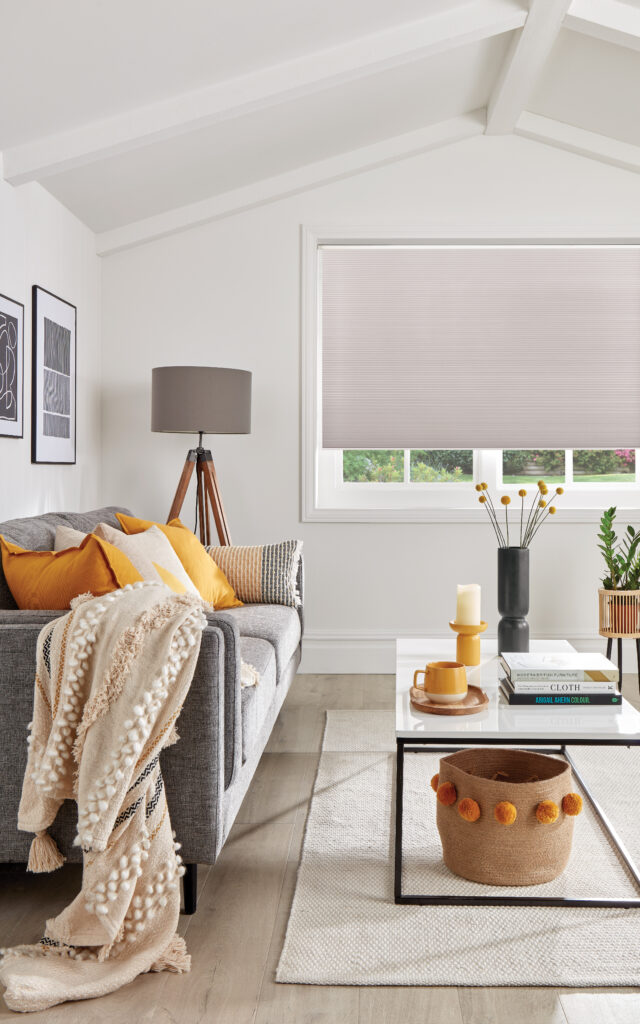
Windows are one of the easiest places to lose (and gain) heat in a home. Cellular (or honeycomb) blinds are designed specifically to slow that heat exchange and in turn, save you money on your energy bills.
What are cellular (honeycomb) blinds?
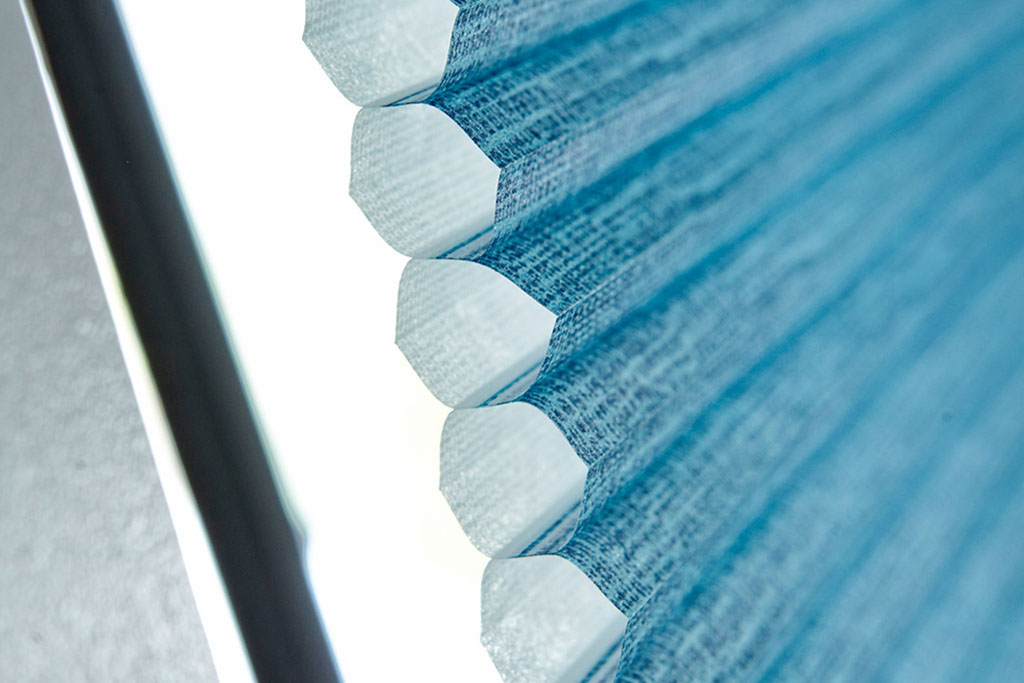
Cellular blinds are made of pleated fabric formed into a series of hollow “cells” that look like a honeycomb when viewed from the side.
Those hollow pockets trap air and form an insulating barrier between the window glass and the room. Designs vary, and performance rises with more cells and higher-quality fabrics.
How do they help regulate temperature?
Insulation — they add R-value: The air trapped inside each cell reduces heat conduction through the window, effectively boosting the window’s R-value (thermal resistance). That means less heat flow outwards in winter and less heat seepage inward in summer.
See the Department of Energy’s Energy.gov report on window coverings and energy saving for more info.
Reduce convective losses: When blinds are closed at night they reduce draughts and slow the convective currents close to the glass, which otherwise carry warm room air to the cold window and out. Well-fitted cellular blinds reduce the air exchange at the window edge.
Reflective/low-e face options. Some cellular blinds use reflective or low-emissivity coatings or fabrics on the inner face to reduce radiative heat transfer, which helps in both sunny winters by capturing light while reflecting heat and hot summers by reflecting solar gains.
Book an appointment
Choose your perfect fabric and blind in the comfort of your home with our expert team.
request appointment
The energy-saving evidence
The BBSA commissioned tests at the University of Salford’s Energy House found that blinds and shutters can reduce heat loss through windows by up to around one-third — a substantial reduction that translates to lower heating demand and smaller bills when used correctly.
How that plays out on your bills depends on your house, windows, heating system, and behaviour — but cutting heat loss at the window is a measurable saving.
Up to
33%
Heat Loss
Reduction
Independent studies show that a cellular blackout blind can reduce heat loss by up to 33%! Read the BBSA research
Great for Conservatories
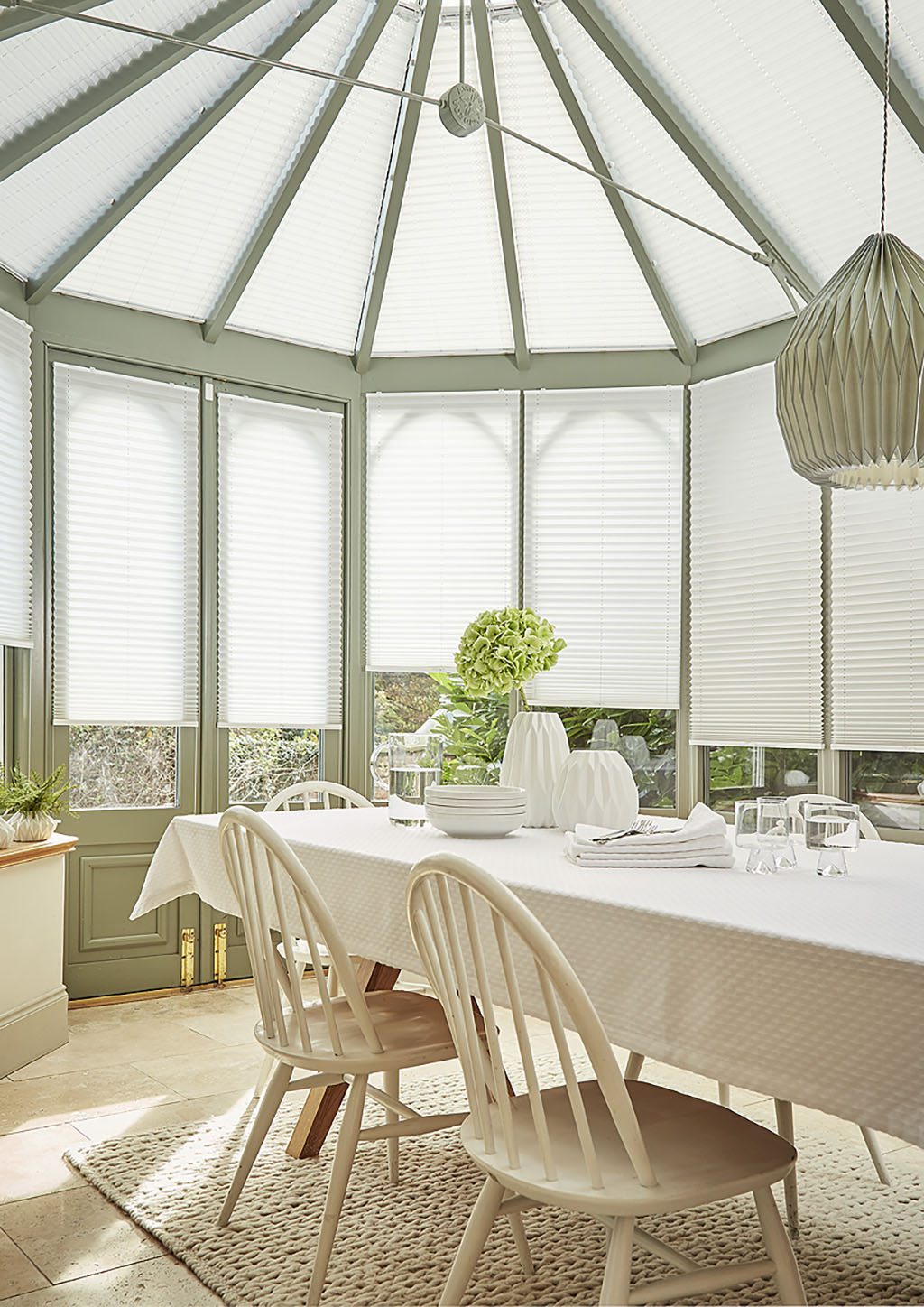
If you have a conservatory and are struggling to keep it warm in winter (or cool in summer) consider trying cellular blinds. Our team can fit blinds to conservatory roofs, even if they’re odd shapes.
Practical tips to maximise savings
- Choose the best quality fabrics and cellular blinds that you can
- Ensure you’ve got a good fit – our professional fitters will make sure that your blinds are fitted properly to reduce gaps where heat can sneak out.
- Open them on sunny winter days, close at night; lower during hot daylight in summer.
Can Cellular blinds be motorised?
Yes! All of our blinds ranges can be motorised, and many are compatible with smart automation apps like Google Home and Amazon’s Alexa.
What about other blind styles?
All blinds can contribute to preventing heat loss through windows, and many of our fabrics come in thermal ranges that are designed to save energy.